
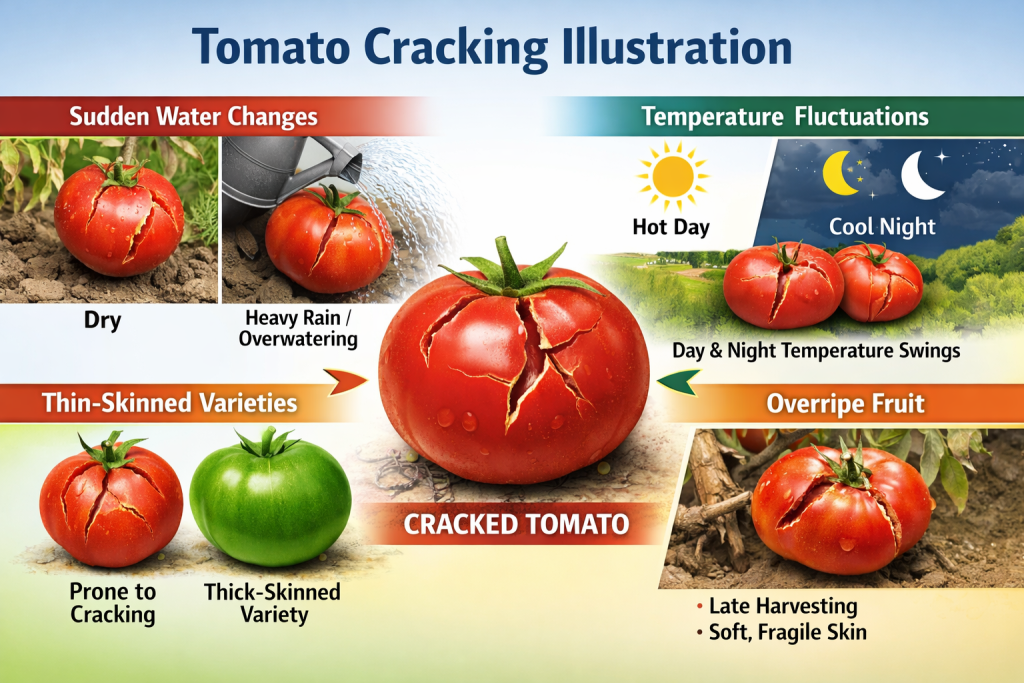
Summary: Why do tomatoes crack? This is a common problem faced by many growers. In fact, tomato cracking is usually related to changes in water levels, climate conditions, variety characteristics, and fertilization management. This article will explain the main causes of tomato cracking and provide practical prevention and improvement methods to help you reduce cracking rates and improve fruit quality and yield.
During the growing process, many people encounter the issue of why tomatoes crack. Fruits that appear healthy may suddenly develop cracks before ripening or during color change, which not only affects appearance but also reduces market value. In reality, tomato cracking is not accidental but the result of multiple factors working together.
1. What Causes Tomato Cracking?
To solve the problem, we must first understand why tomatoes crack. The common causes include the following:
- Sudden changes in water levels: After a long dry period, heavy watering causes the fruit to absorb water rapidly, leading to expansion and skin splitting.
- Large temperature fluctuations: High daytime temperatures and low nighttime temperatures cause uneven expansion between the skin and flesh.
- Variety differences: Some thin-skinned varieties are more prone to cracking.
- Late harvesting: Overripe fruits have thinner skins and are more likely to split.
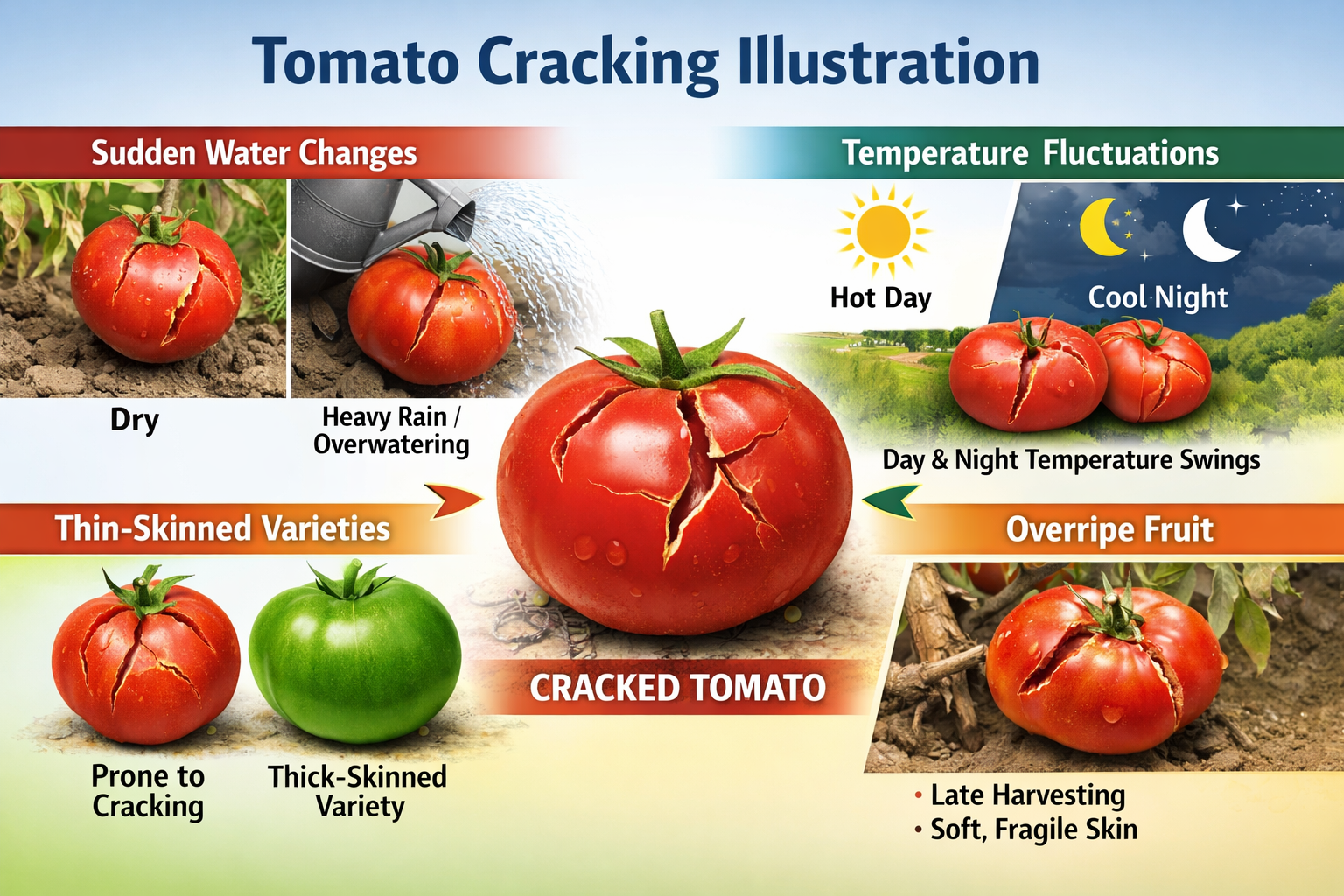
2. Improper Water Management Is the Main Cause
Among all factors, “unstable watering” is the most critical reason behind tomato cracking problems. When the soil alternates between dry and wet, tomatoes absorb water quickly, increasing internal pressure. If the skin cannot expand in time, cracks will appear.
Recommended practices:
- Maintain consistent soil moisture and avoid extreme dryness or wetness
- Use drip irrigation or water in small amounts frequently
- Apply mulch (such as straw) to reduce water evaporation
If you are not familiar with proper watering methods, you can refer to this guide: 番茄澆水技巧
3. Climate and Environmental Factors
Climate changes are also one of the reasons for tomato cracking. This is especially common during summer or rainy seasons:
- Cracking increases after heavy rainfall
- High temperatures cause thinner fruit skin
- Large day-night temperature differences create uneven internal pressure
Solutions:
- Build rain shelters to reduce direct rain impact
- Provide shading to lower heat stress
- Choose well-ventilated growing environments

4. Fertilization and Variety Selection
Many people overlook that fertilizer management also affects tomato splitting:
- Excess nitrogen → rapid fruit expansion
- Calcium deficiency → weaker fruit skin
Recommendations:
- Use balanced fertilization and avoid excessive nitrogen
- Supplement calcium to strengthen fruit skin
- Choose crack-resistant varieties (thick-skinned types)
5. How to Prevent Tomato Cracking Effectively
After understanding why tomatoes crack, the key is prevention and proper management. Here are practical solutions:
- ✔ Maintain consistent watering frequency (most important)
- ✔ Harvest earlier (at the color-changing stage)
- ✔ Increase calcium and potassium fertilizers
- ✔ Use mulch to retain moisture
- ✔ Avoid direct sun exposure immediately after rain
If you are a beginner, it is recommended to start with a complete growing guide: 番茄種植指南
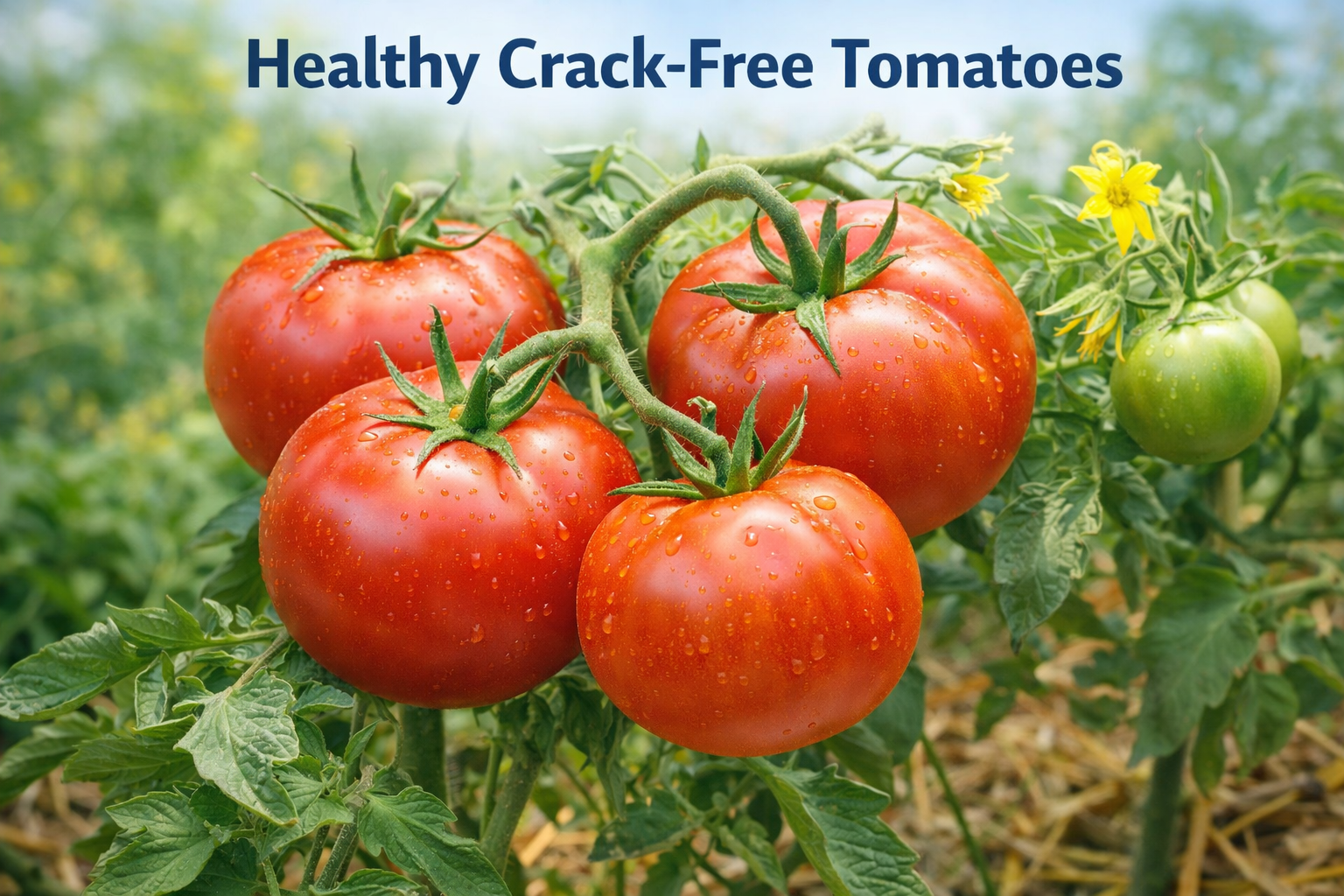
Conclusion: Key Tips to Prevent Tomato Cracking
In summary, why tomatoes crack is mainly related to water management, climate, and cultivation practices. By controlling watering frequency, applying balanced fertilization, and selecting suitable varieties, you can significantly reduce tomato cracking.
For more professional growing advice, you can refer to this external resource:
RHS Tomato Growing Guide